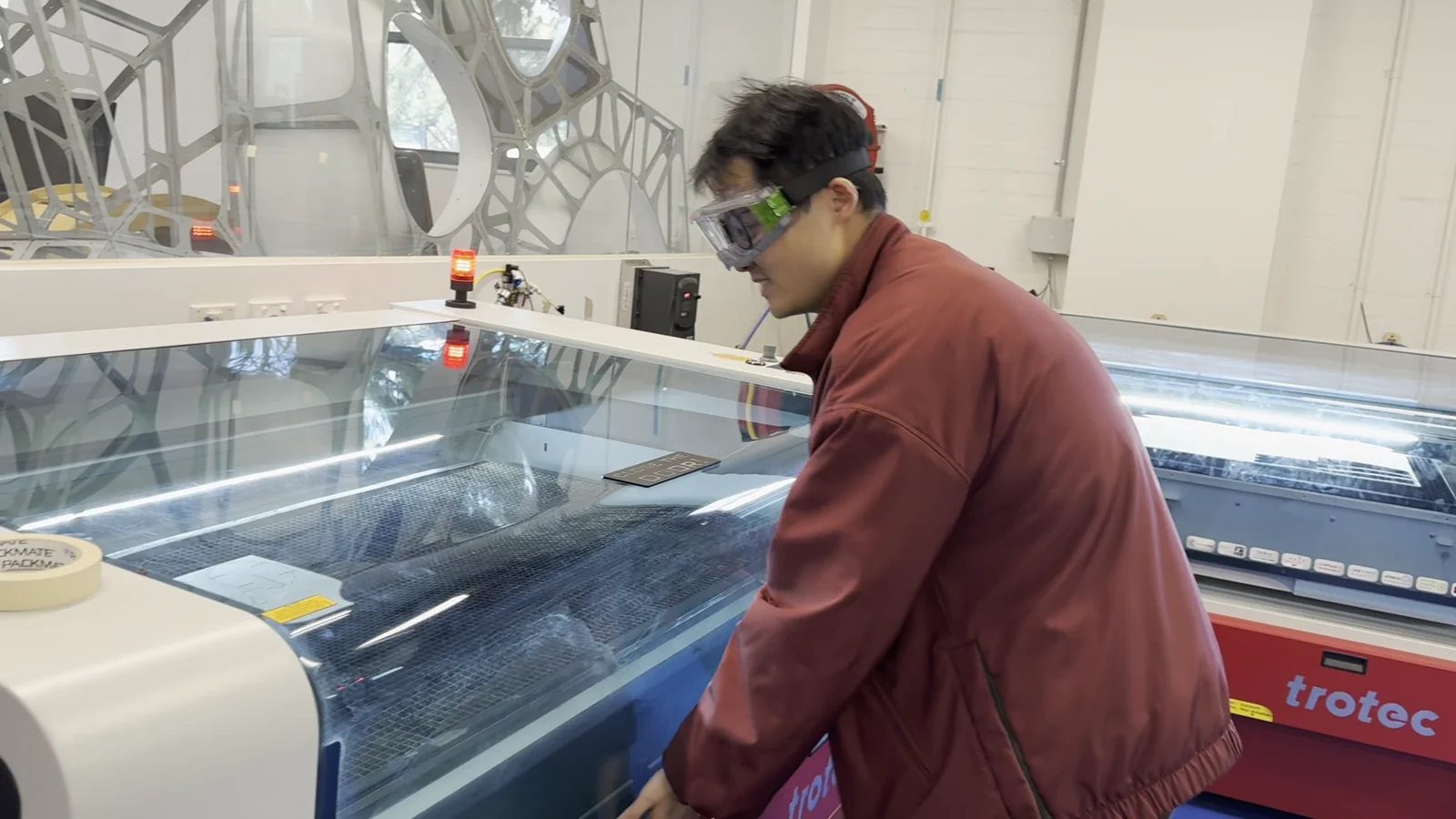
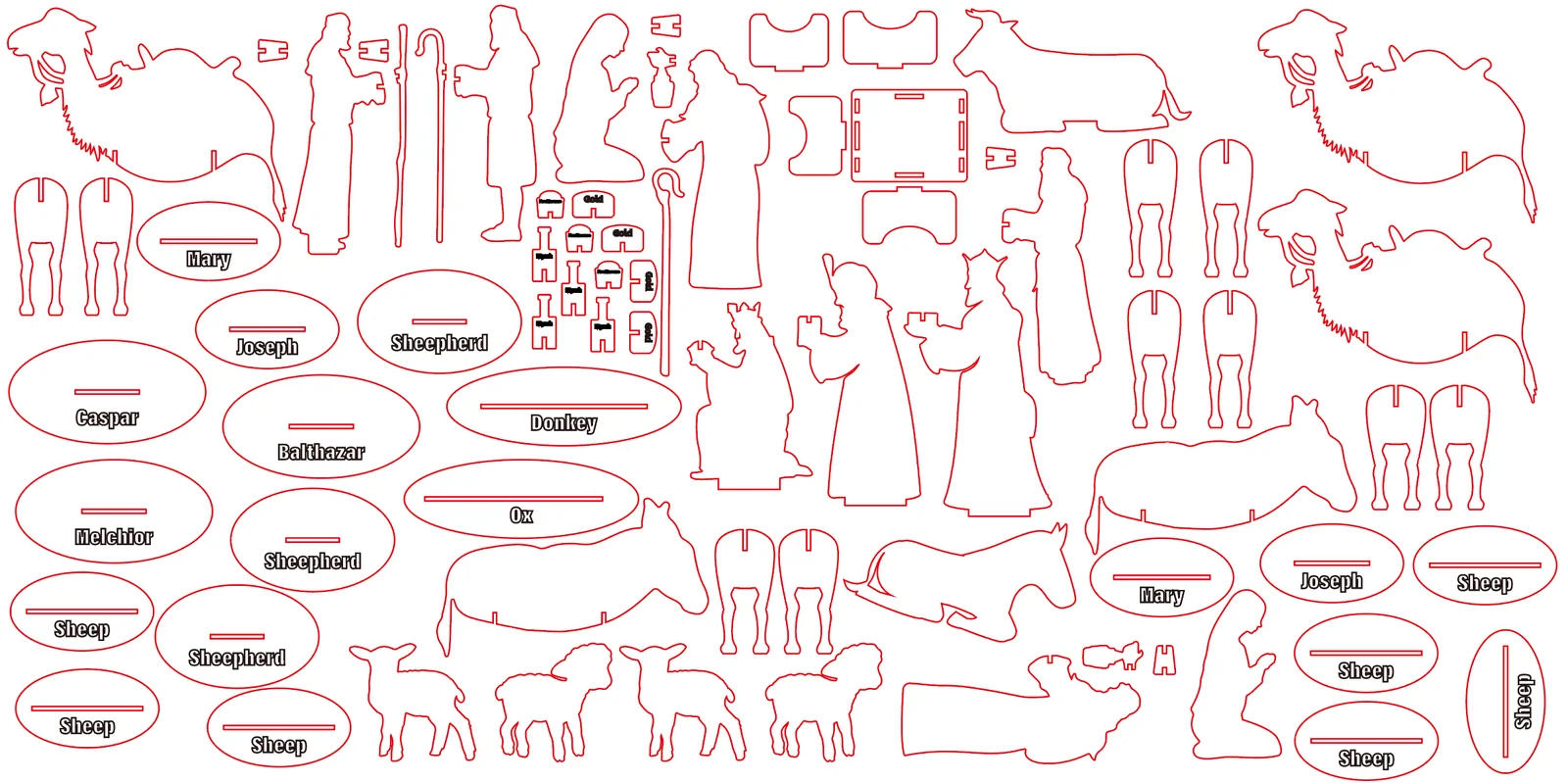
Making at ProtoLAB. Turning the digital files into wooden parts. Video still, 2024.Preparing the cutting files. Outlines, slots, and separate bases for the Nativity figures.
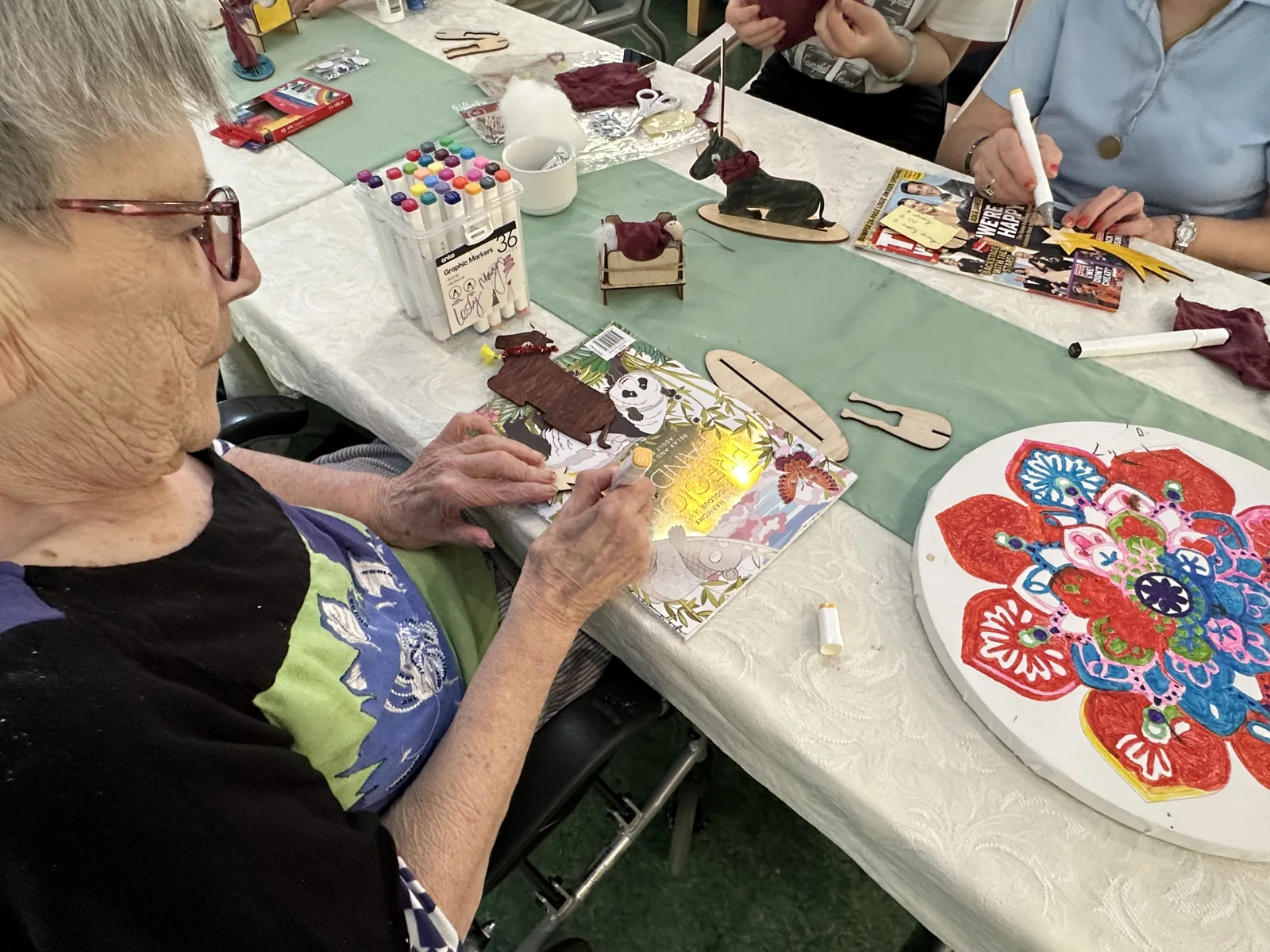
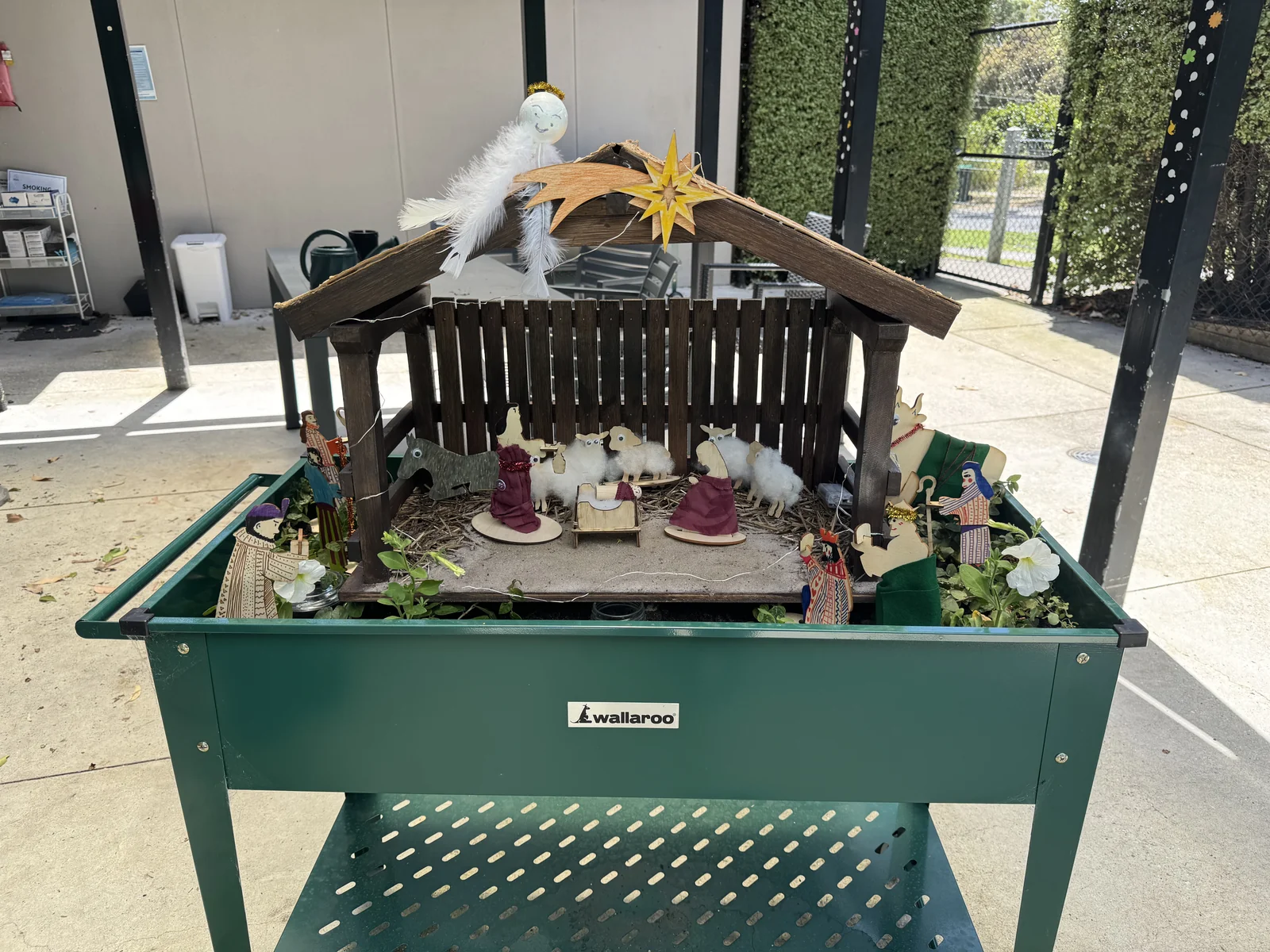
Figures to personalise. Adding colour and detail to the prepared wooden forms, November 2024.The shared outdoor display. The decorated figures together in the garden, December 2024.
Visual communication
Visual & information design.
Cards to carry, information beside the plants, and a large map to explore together.
Skills Information design · Print production · Spatial illustration
Design process
Recognise. Use photographs of the plants along the walking route.
Explore. Pair images with short prompts to look, try, and talk.
Make. Produce cards for carrying and hanging outdoors.
Card specifications
Size
12 × 18 cm
Material
3 mm acrylic
Printing
UV printing
Formats
Hand-held & hanging
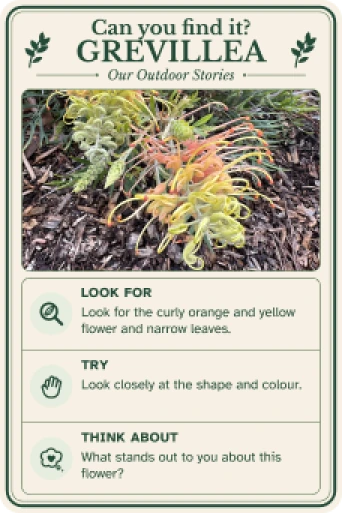
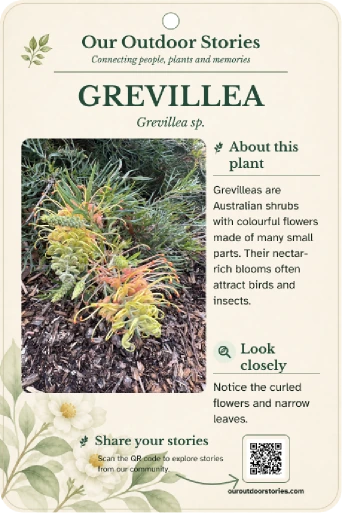
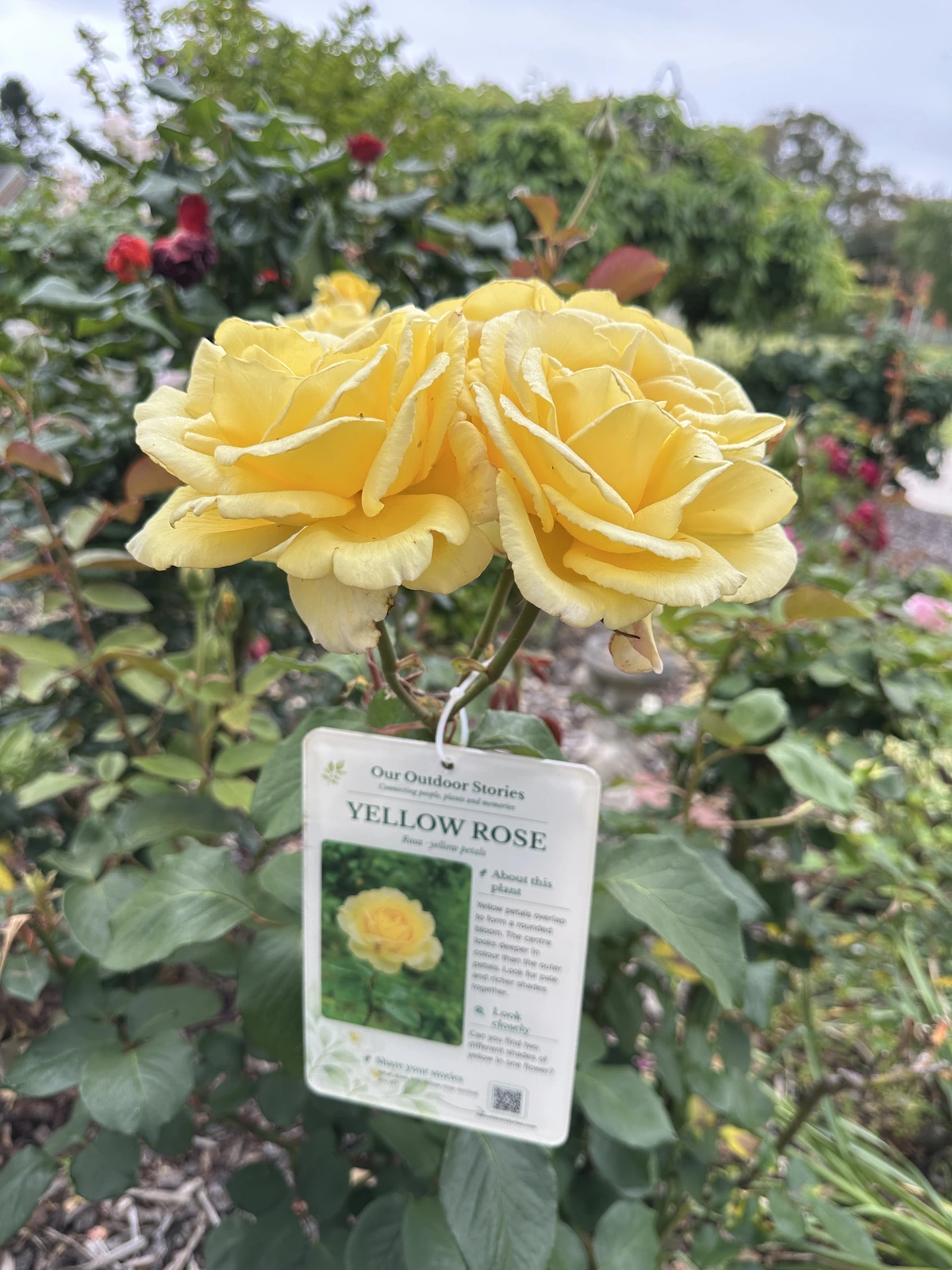
Treasure hunt card. A portable prompt for looking closely.Plant information card. A shared reference beside the living plant.
Output in use
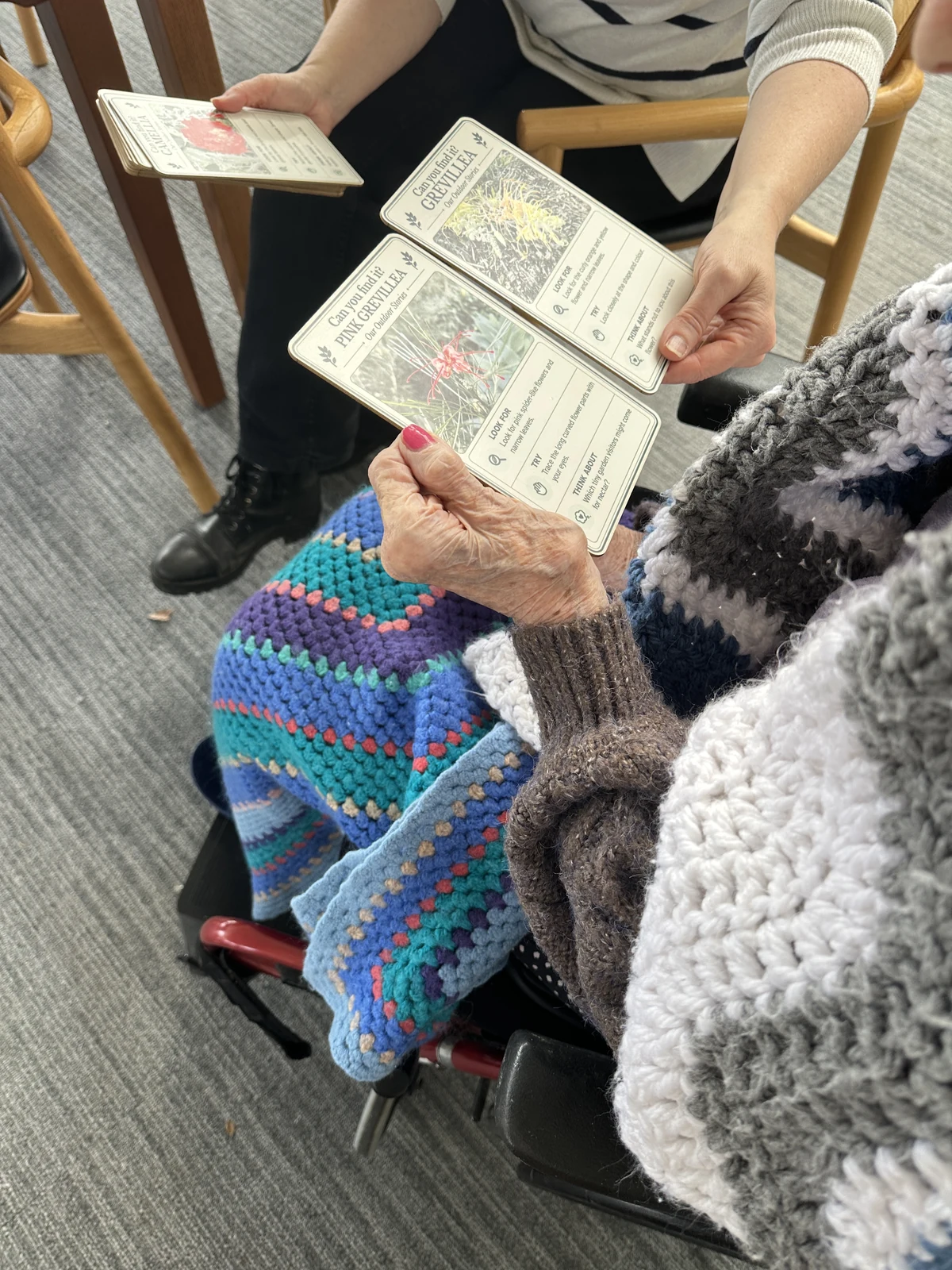
Treasure hunt cards
Hold a card during the walk.
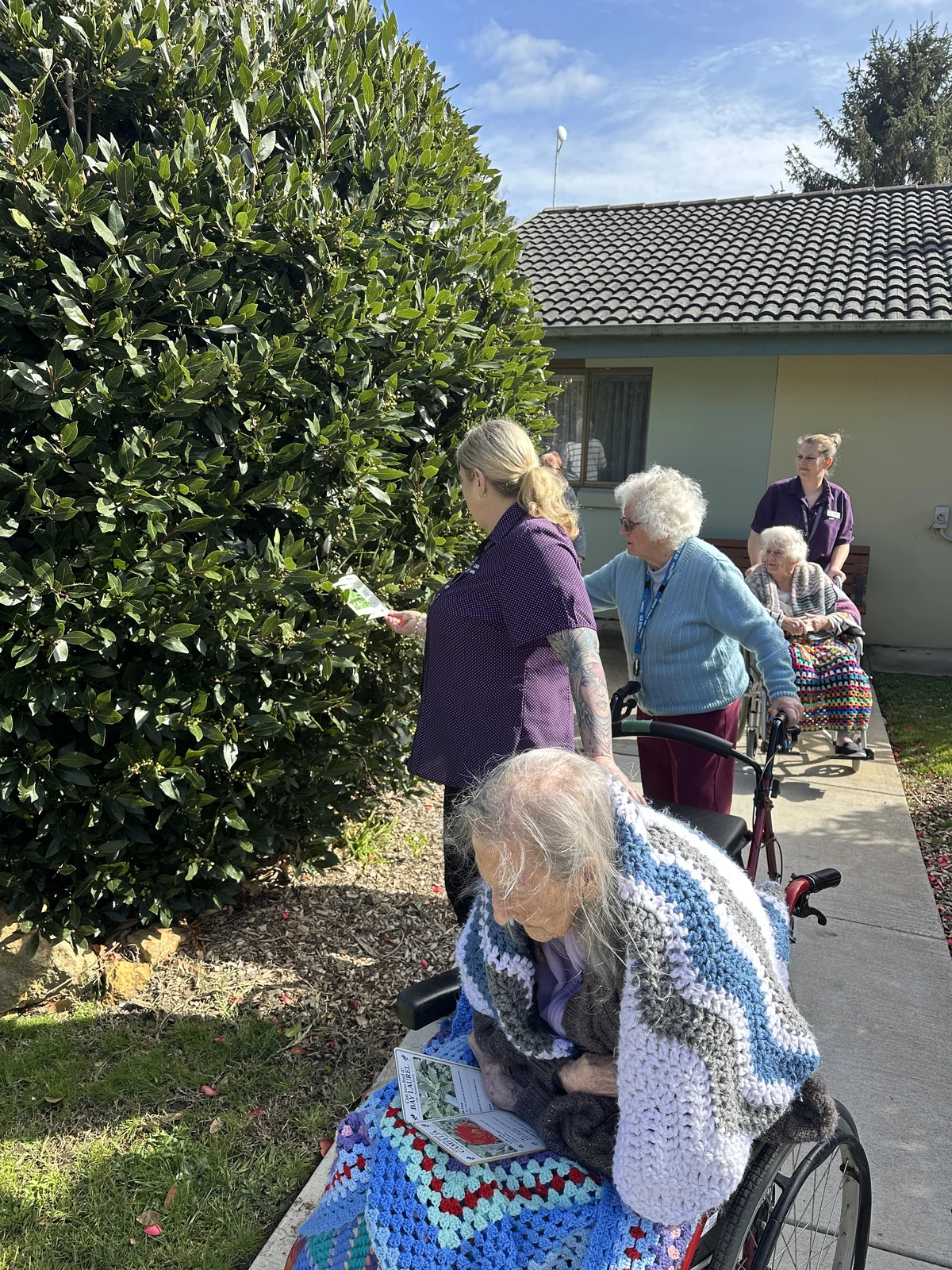
Match its photograph with the plant.
Pause to notice a detail or share a thought.
In residents’ hands. Choosing and looking at the cards before setting off.Along the walking route. Taking the photograph to the plant.
Plant information cards
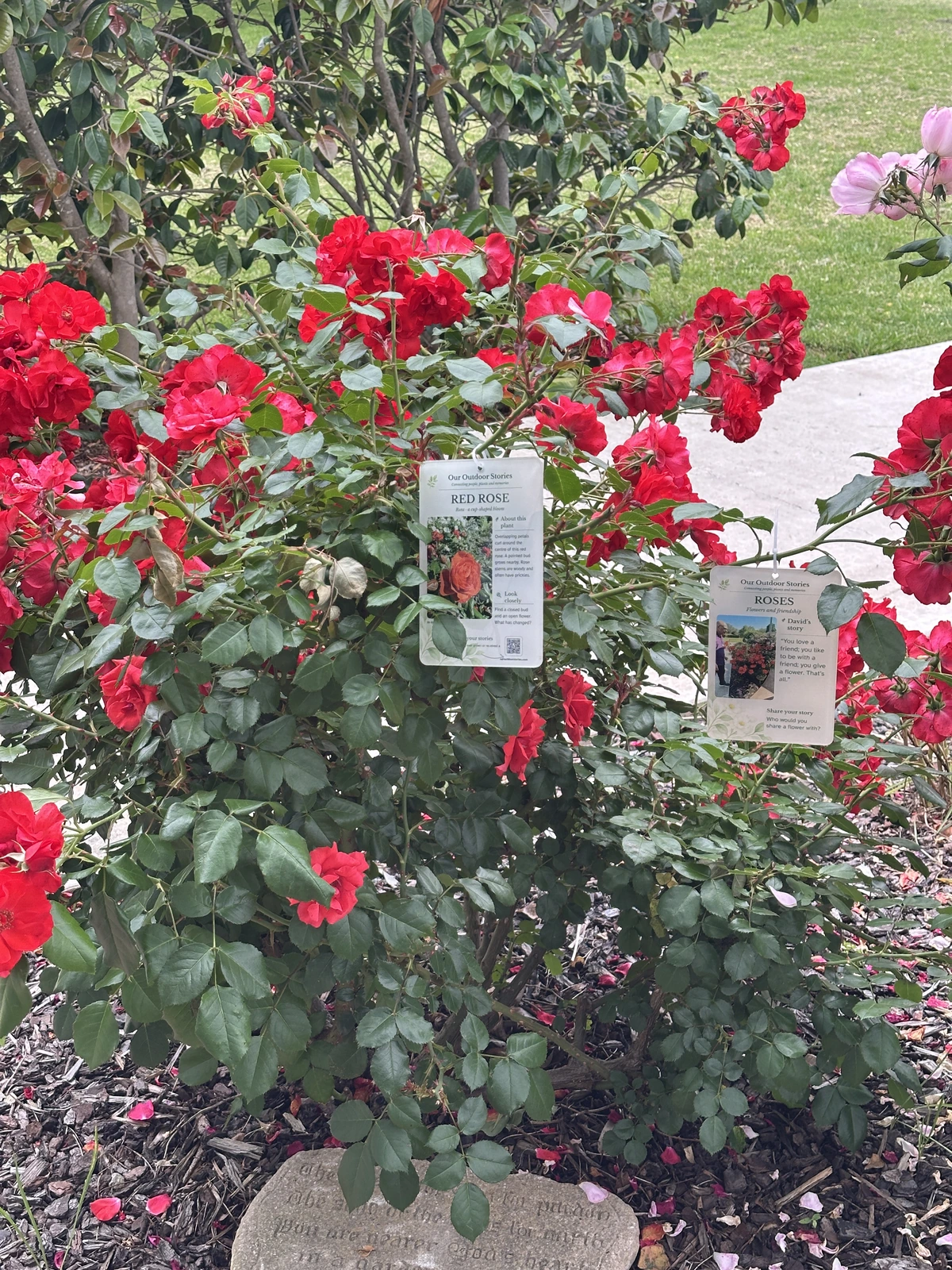
Hang the card beside its plant.
Keep the name, photograph, and prompts together.
Make the information visible on later walks.
Beside the plant. A yellow rose information card hanging from the rose bush, November 2026.Part of the garden. The card stays with the plant along the route, November 2026.
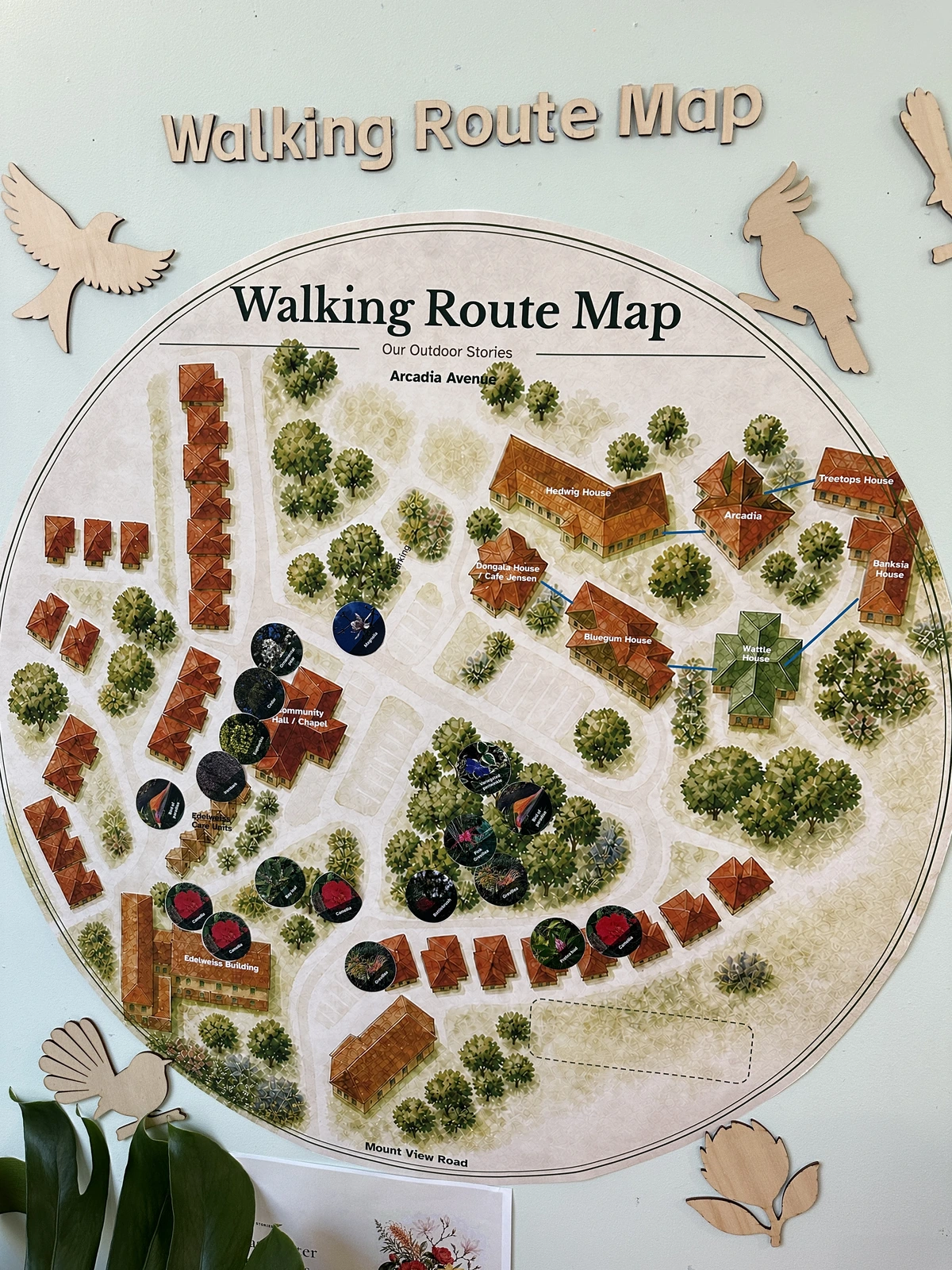
A shared circular map
Bring the walking route into one large visual.
Point to familiar plants and places together.
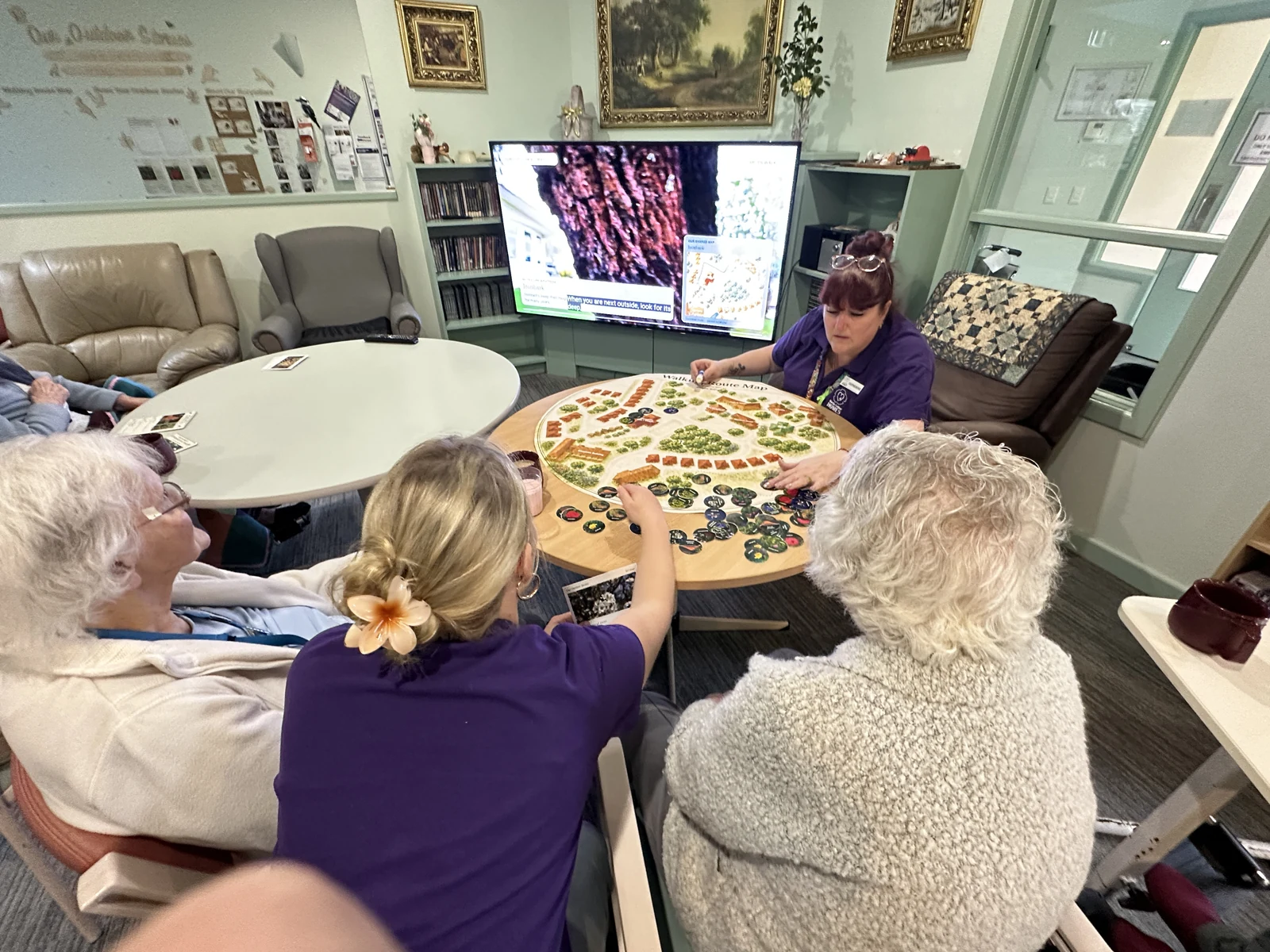
Revisit outdoor experiences in an indoor conversation.
The large-format map. Plants and paths brought together in a circular walking map.A map to use together. Locating plants and sharing memories around the table.
Illustration beyond the fieldwork
Digital illustration, landscape sketches, and scenes from everyday life.