Our Outdoor
Stories.
Connecting garden walks, plant choices, and shared stories across indoor and outdoor spaces.
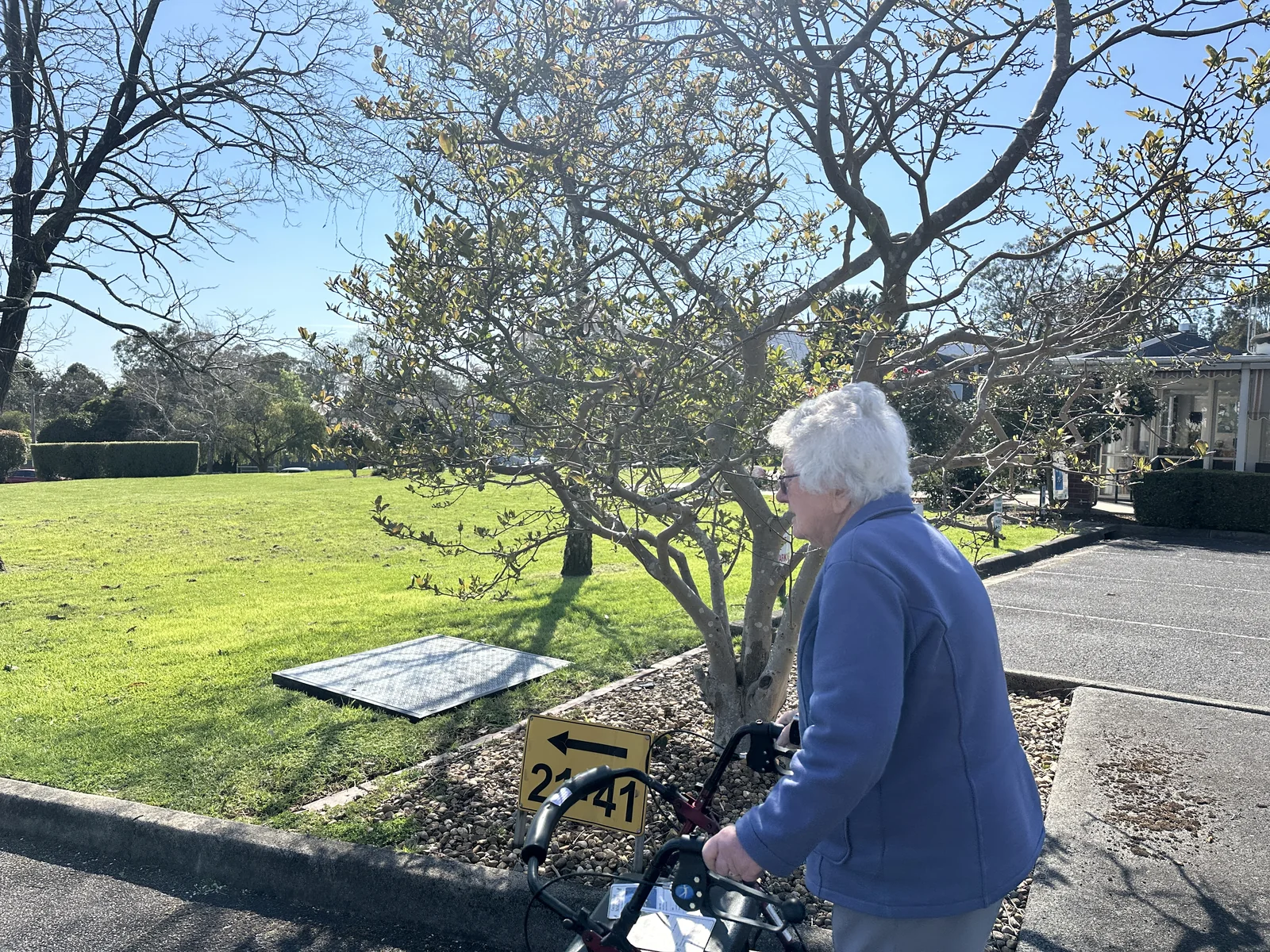
Begin with a familiar walk.
This project starts with an activity that already exists: morning walks. I am exploring how simple materials can help connect what people notice outdoors with conversations and contributions indoors.
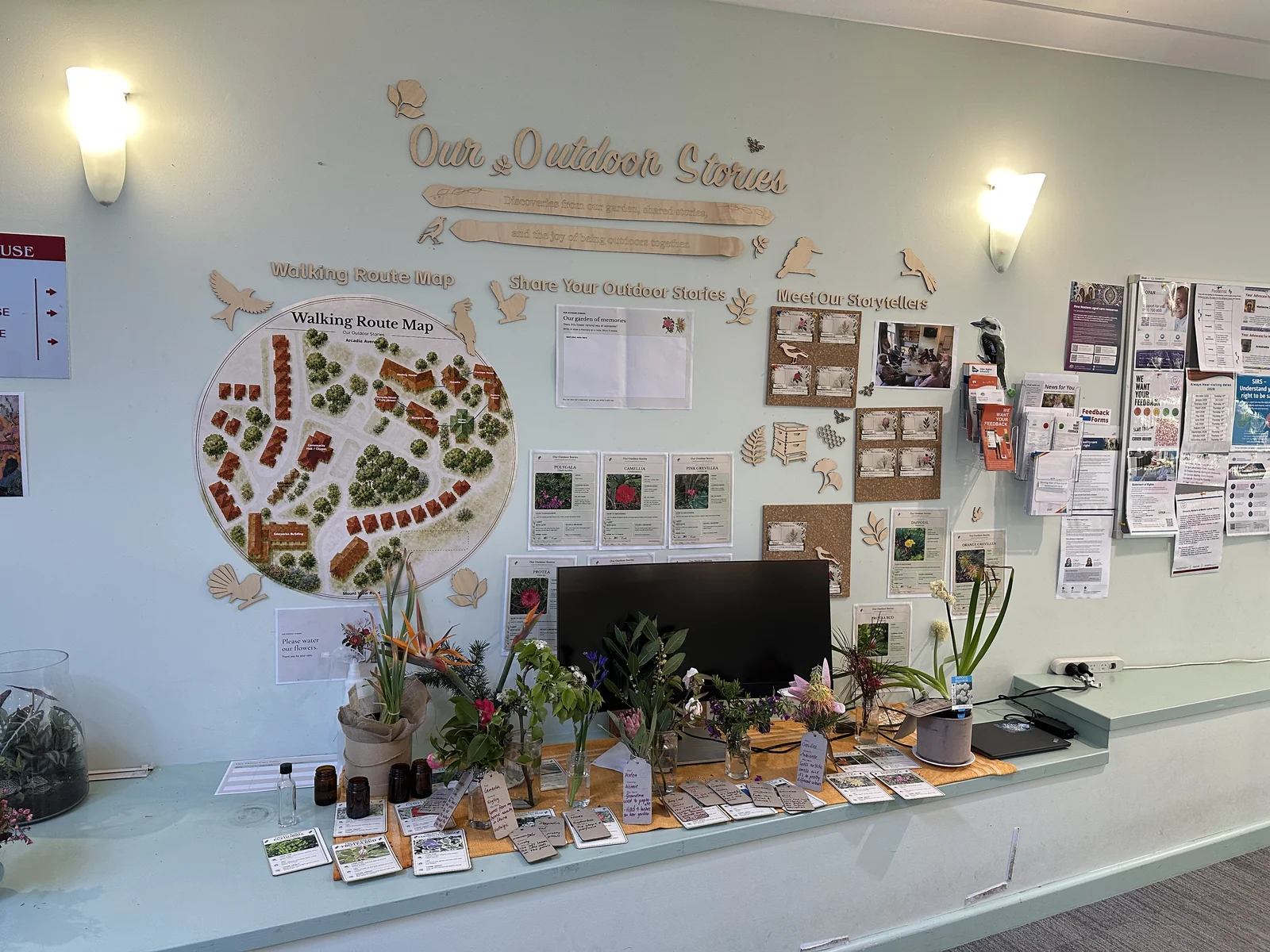
The design includes route maps, plant photographs, story invitations, and a shared display. Working with care staff means attending to how walks are organised, who wants to join, and what can fit into everyday routines.
A map becomes an invitation.
The map concept connects places in the garden with plants, photographs, and stories on an indoor wall. A familiar path or planting area can offer somewhere to begin; what catches someone’s attention gives the walk its direction.
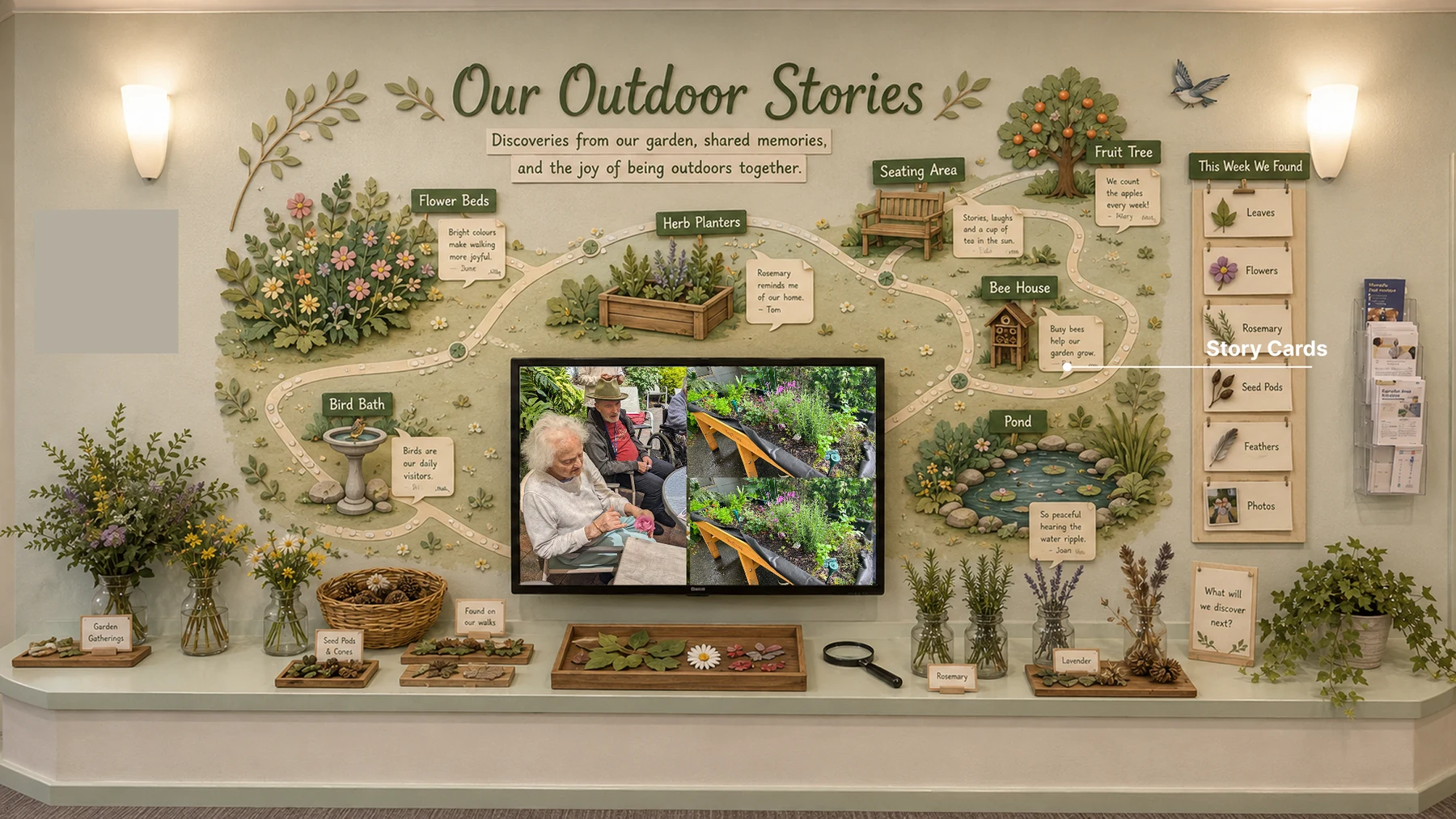
Playful discovery can be as simple as looking for a pictured plant, noticing a flower’s colour, or recognising something familiar. The map gives these small discoveries a place to return to.
- 01
Choose a place.
A familiar path, a flower bed, or somewhere to pause.
- 02
Follow a plant.
Look for a colour, notice a detail, or share what you recognise.
- 03
Bring back a story.
A photograph, a plant, or a few words become part of the shared display.
“Can You Find It?”
Plant-finding cards have been tried during garden walks, with staff helping people notice plants and talk about what they recognised. Photographs, plant samples, and handwritten labels then supported conversations back indoors.
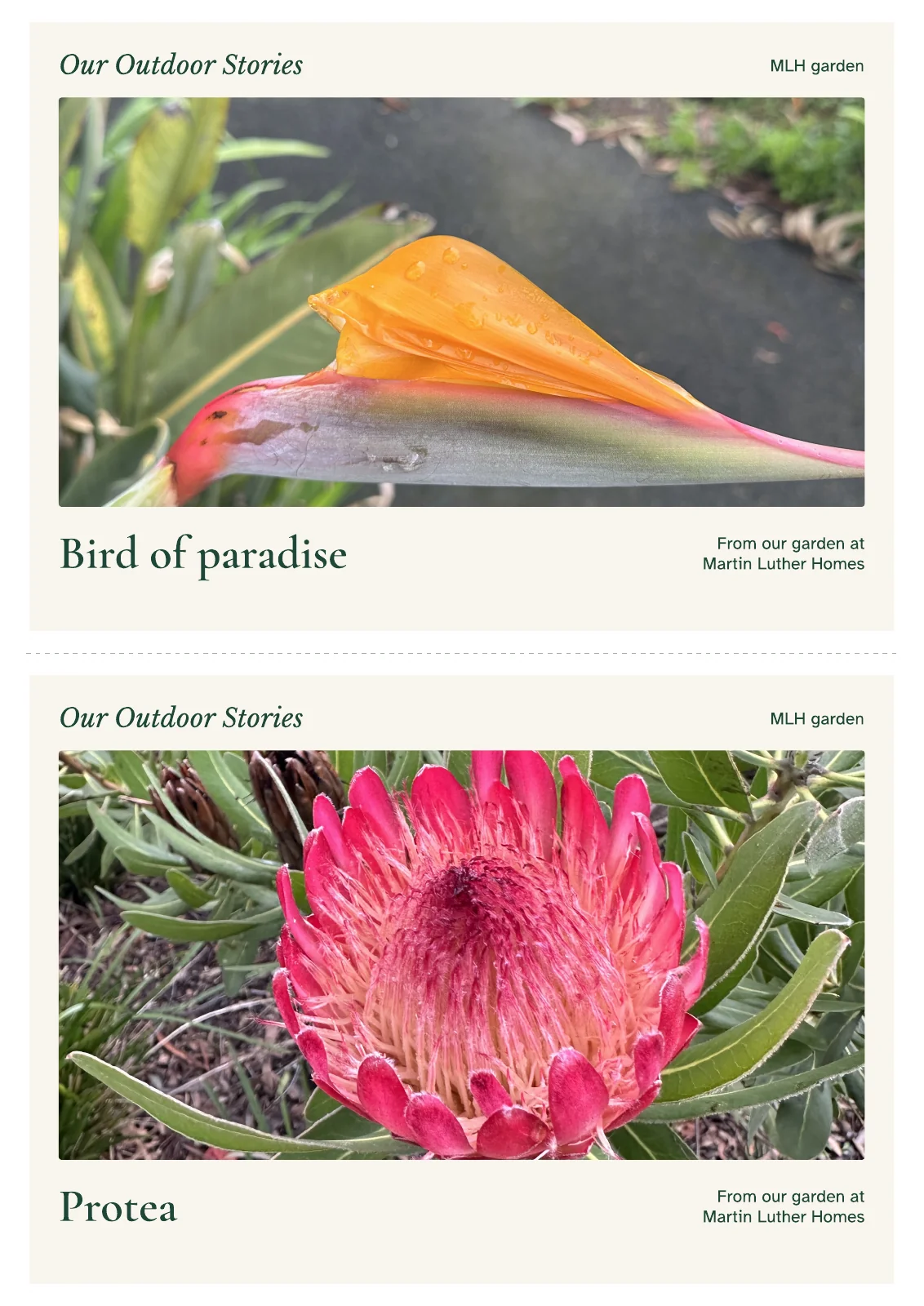
People can pause, follow a different interest, or join the conversation indoors. The design leaves room for their own choices and for the support available during a walk.
Around the map.
In an October indoor session, residents and staff gathered around the walking route map with garden photographs on the screen. The map moved from the table to an upright position, so people could look at its details together.
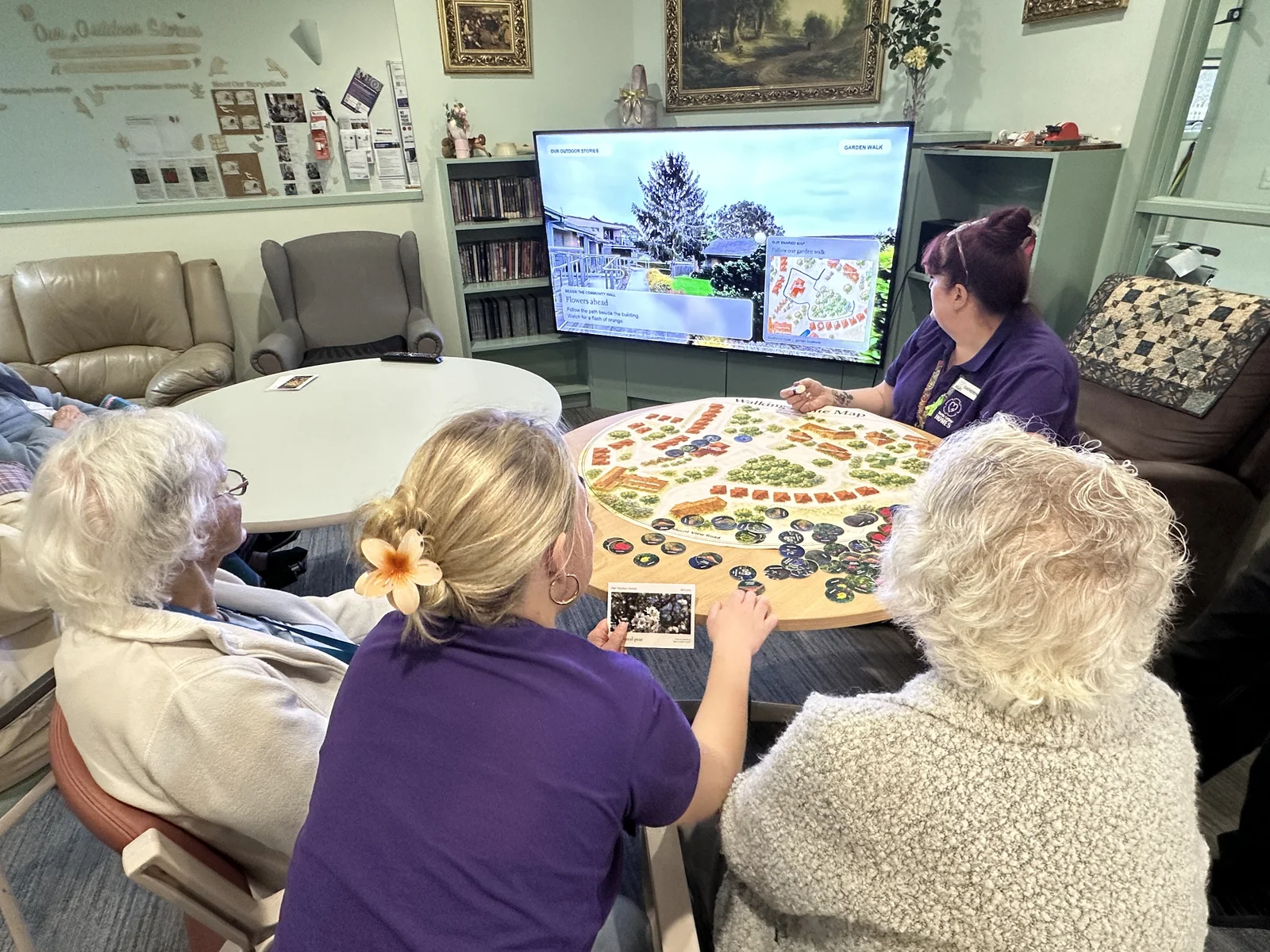
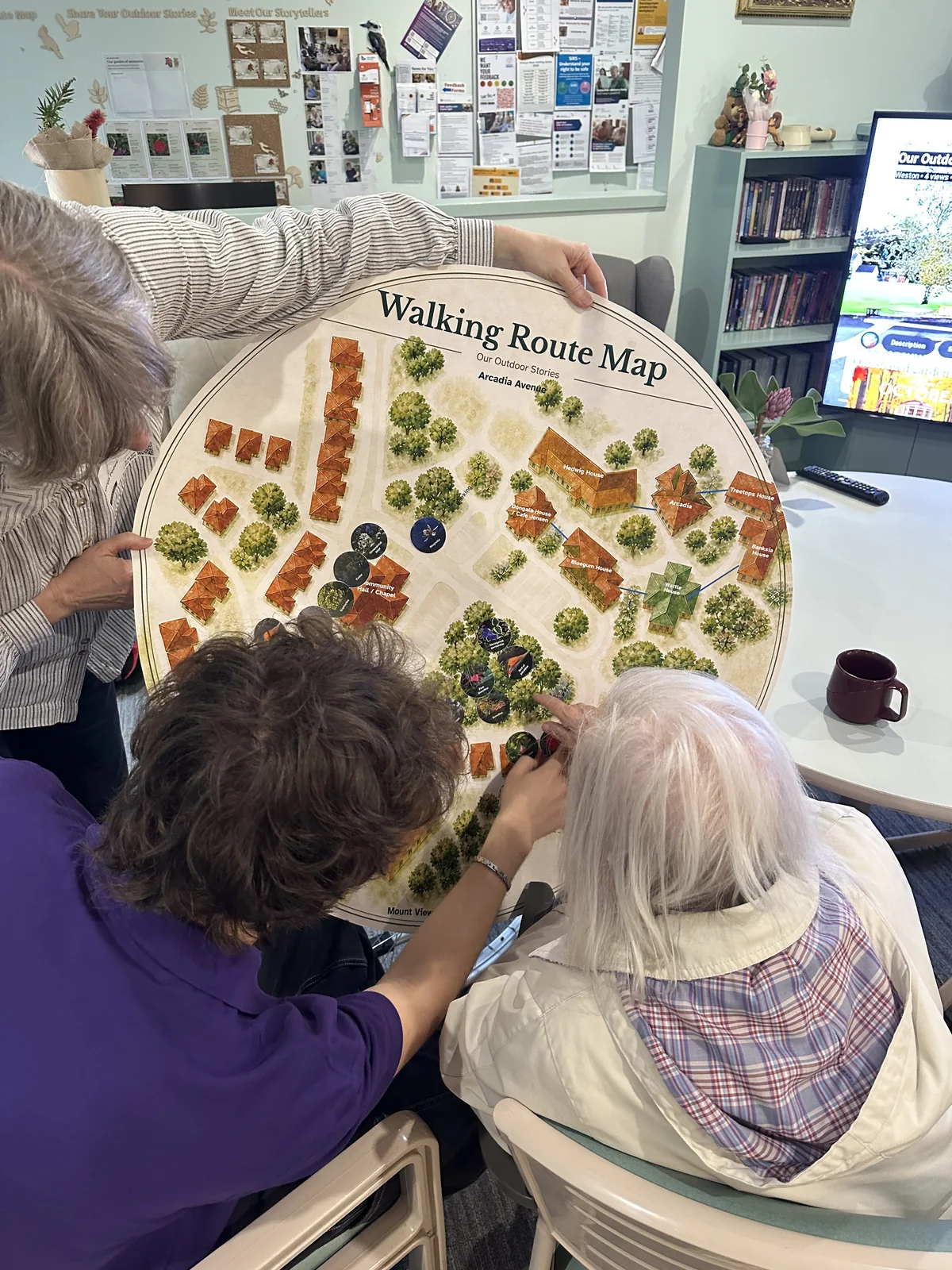
These photographs show how the materials are handled during an activity. Their use continues to inform the design.
More than one way to join.
Participation can include walking, looking at a photograph, handling a plant, talking, drawing, or asking someone to write down a thought. Indoor conversations also create an opening for people who have not joined a walk.
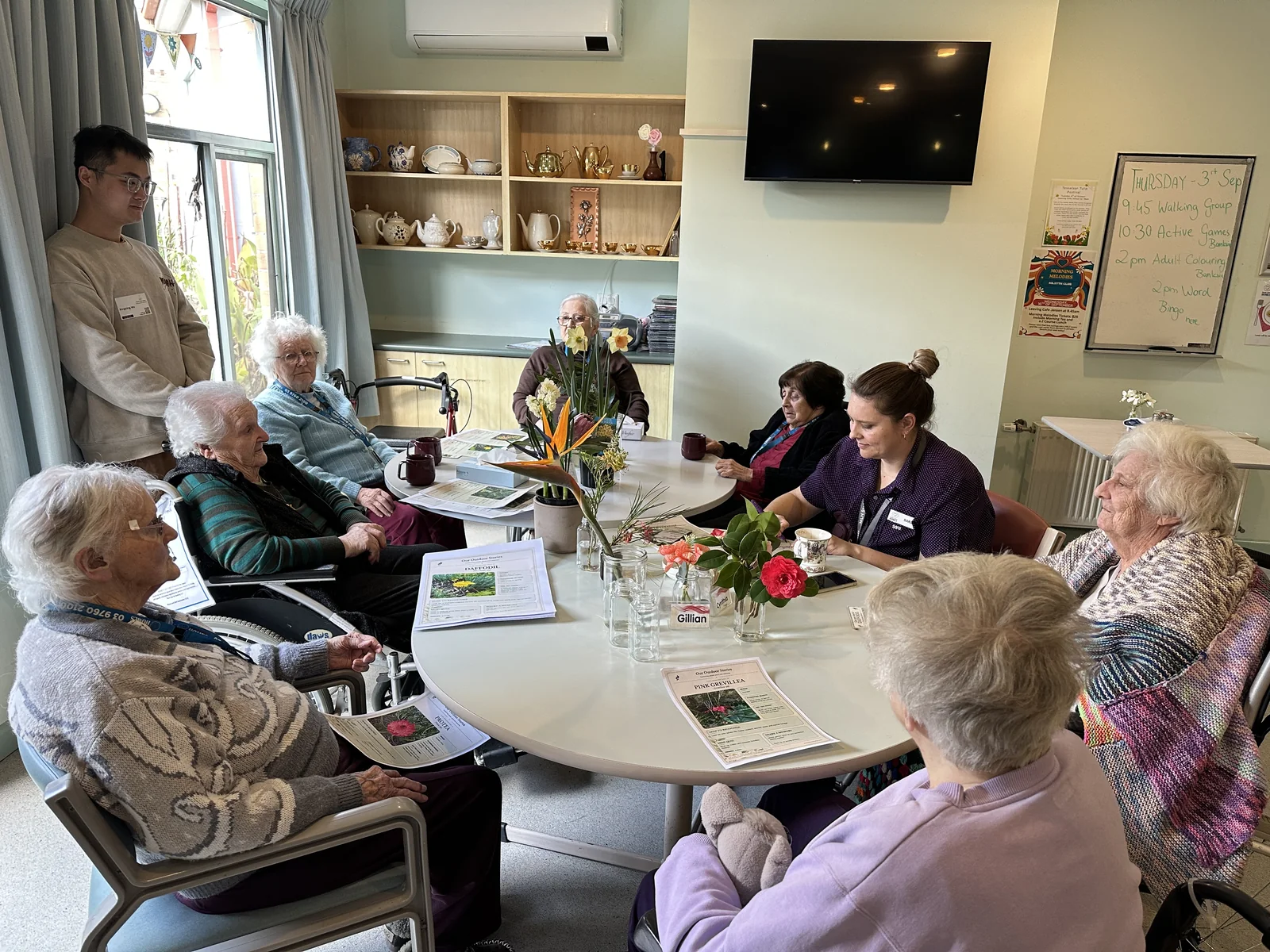
The flowers and printed cards sit within reach of the group. They give us something to hold, look at, and talk about together.
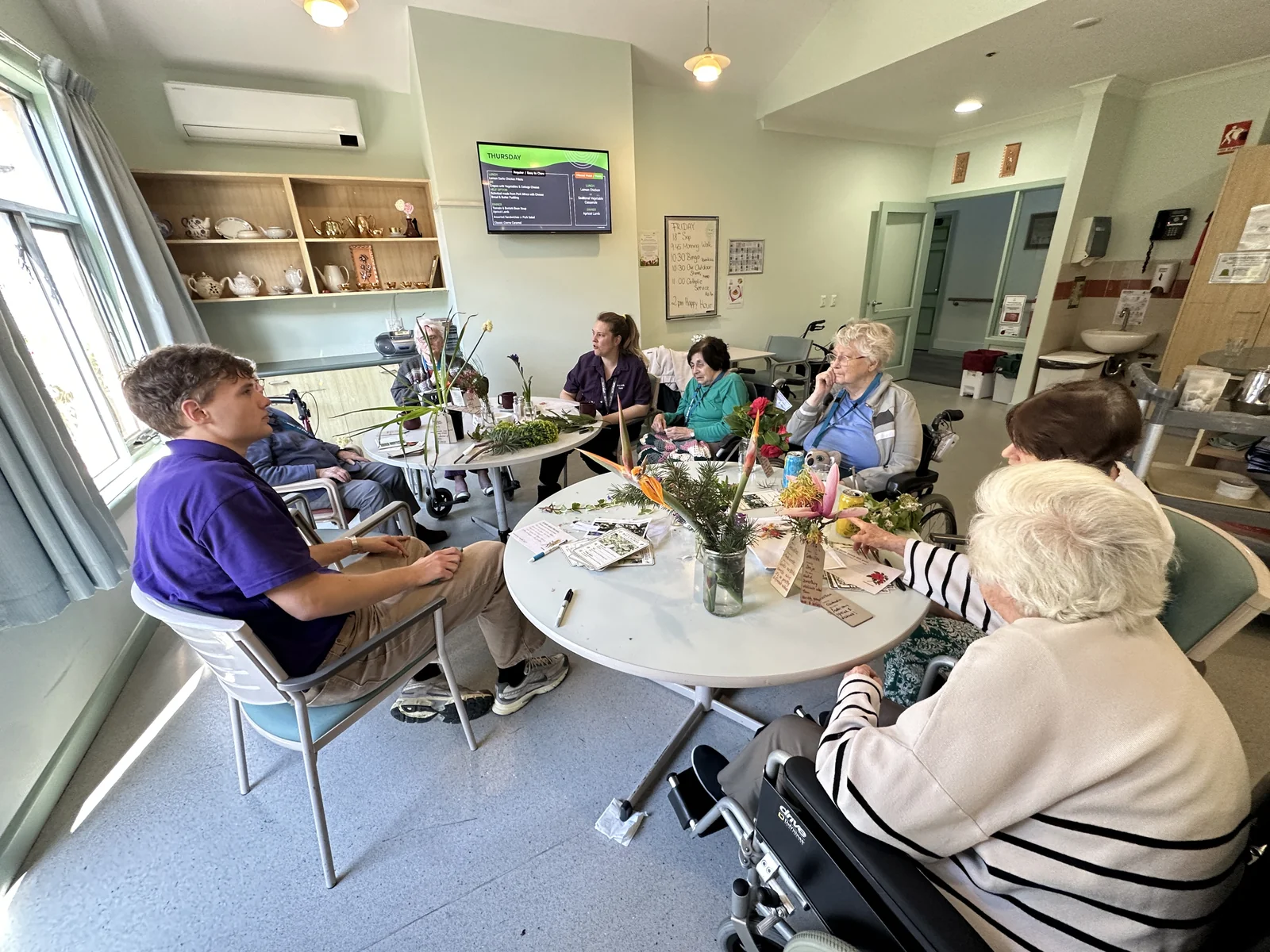
Holding a card can compete with keeping both hands on a walker. Observations like this are shaping questions about carrying materials, pausing along a route, and support from a companion.
A preference leaves a trace.
Plant choices offer a concrete place to start. A colour, a texture, or a flower’s shape can become something to notice and describe. Handwritten labels keep a record of these preferences.
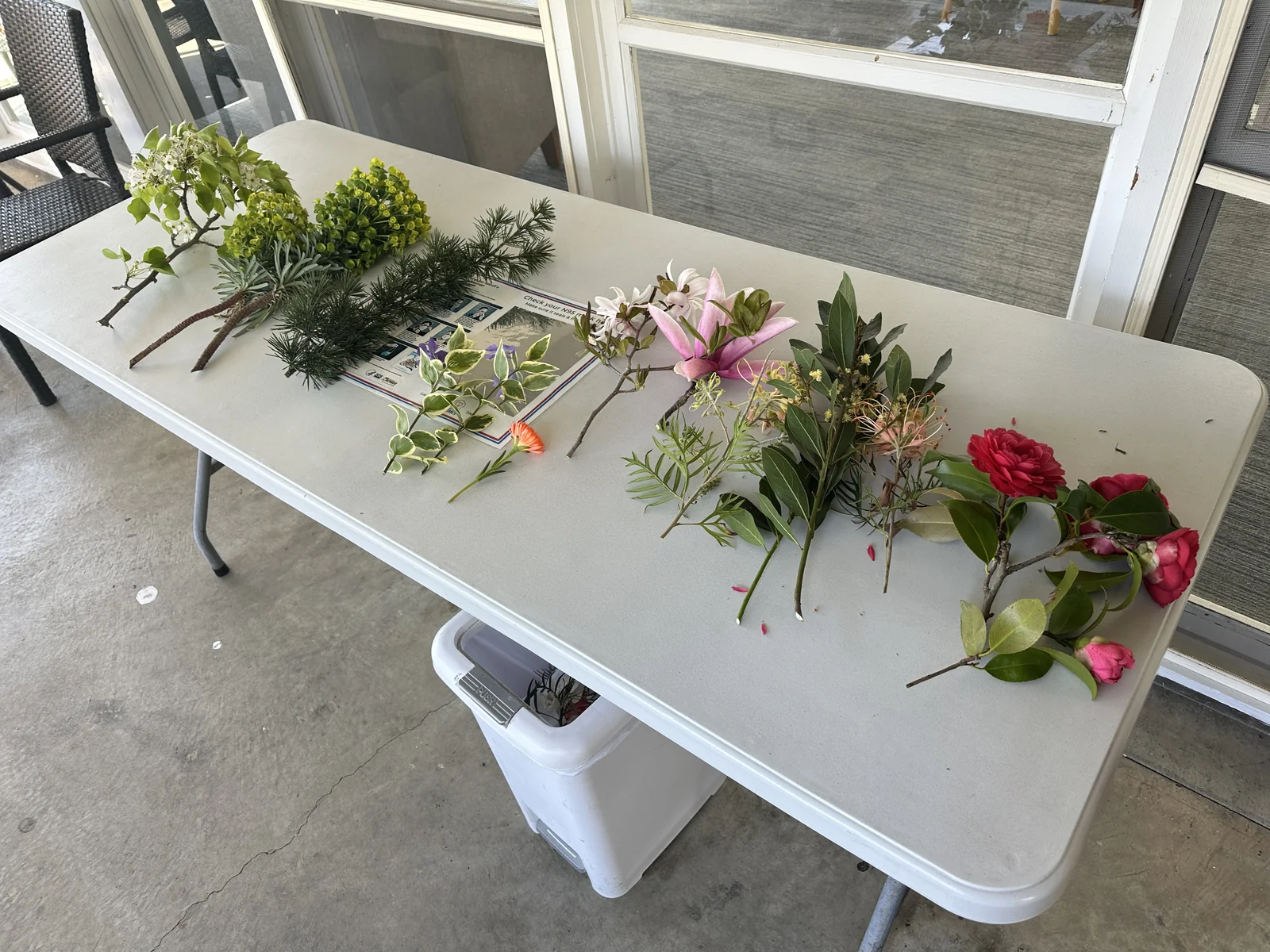
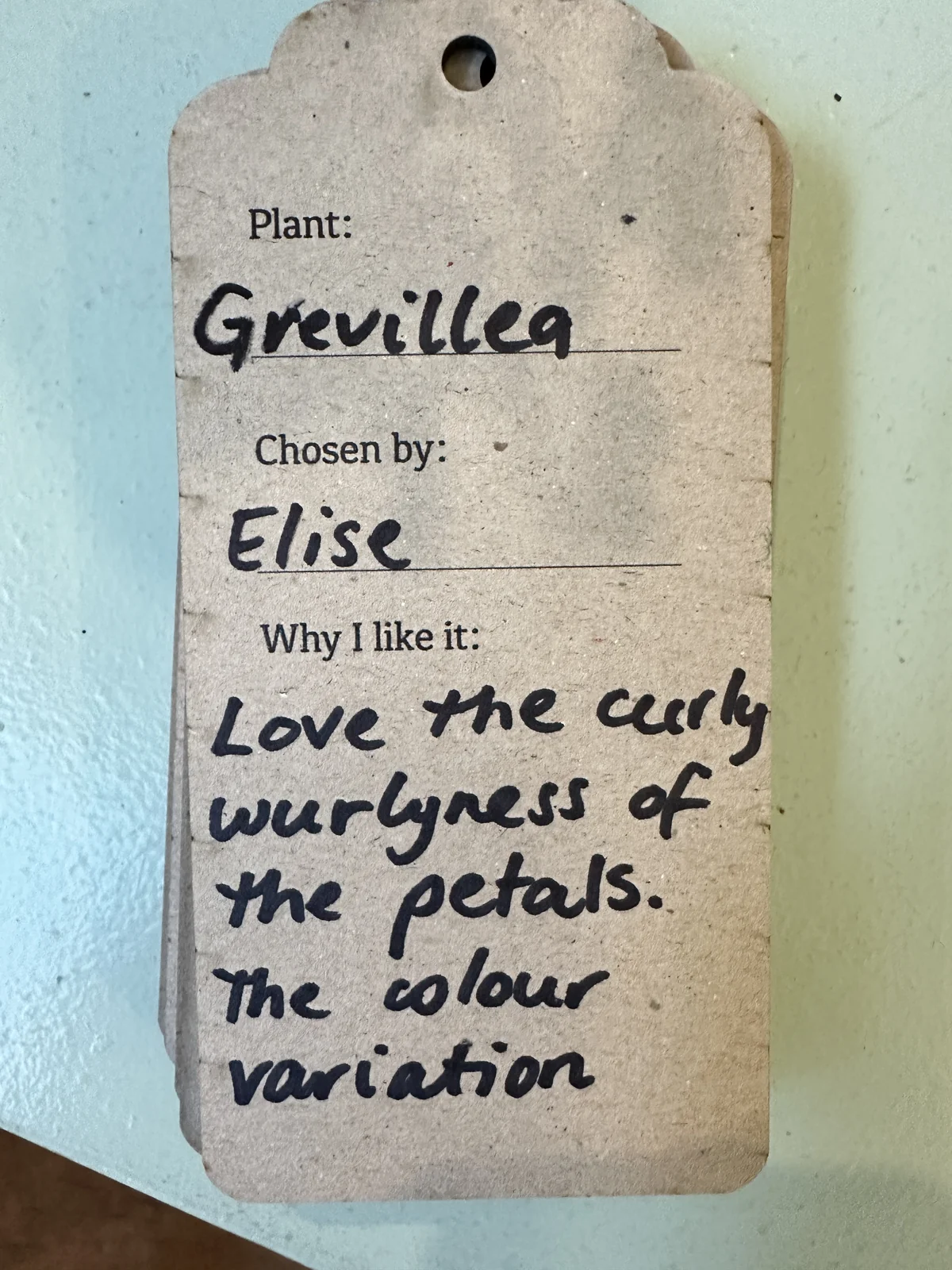
The labels record small, specific observations, while the story invitations leave room for a longer contribution.
A flower can hold a story.
Handwritten tags connect chosen plants with observations, preferences, and memories. Placed around a glass bottle, these contributions stay close to the flower that prompted them.
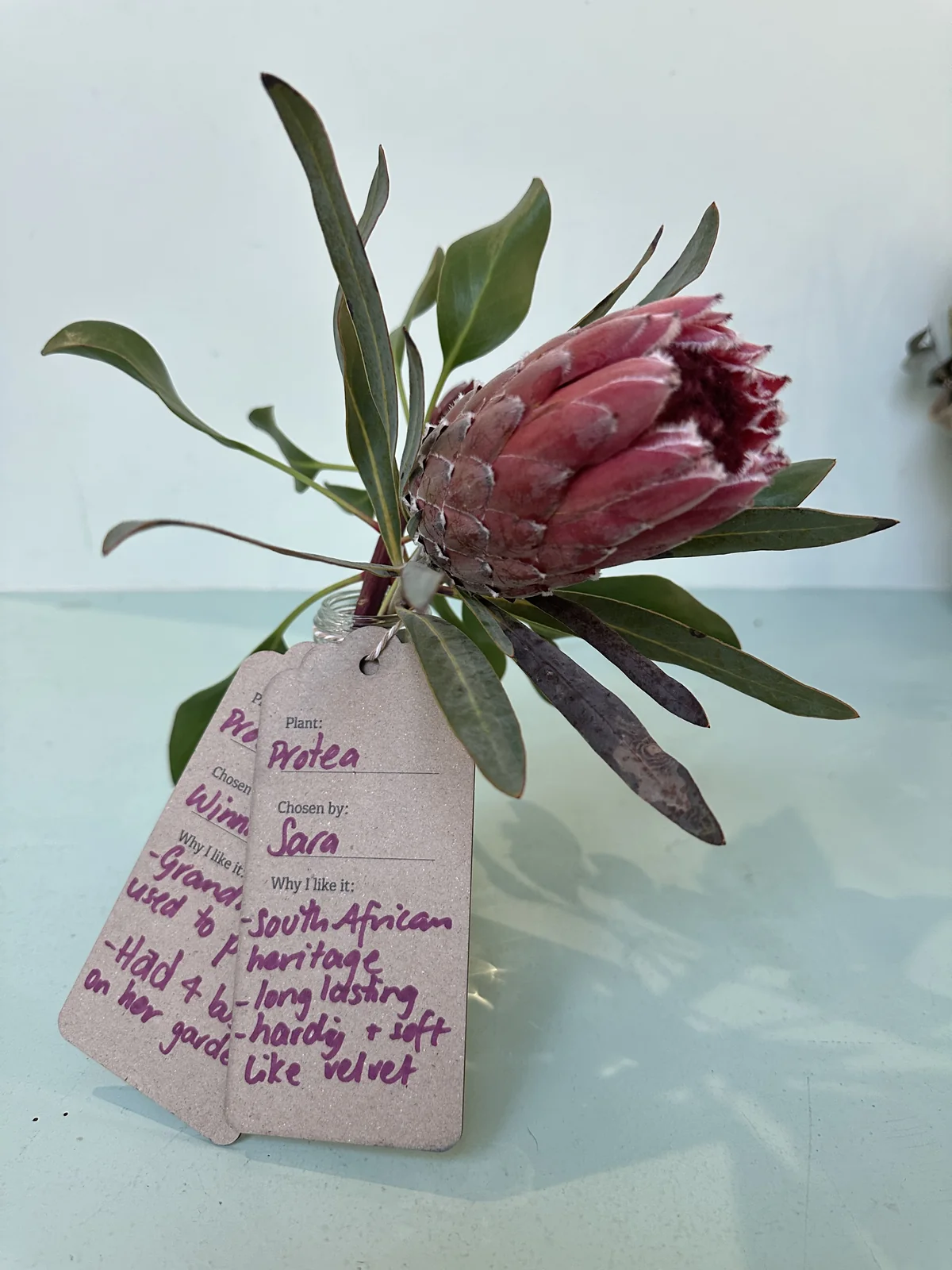
What stays after the session?
The display brings a route map, plant information, contributions, and fresh flowers into a shared indoor space. Story invitations and flower-care materials are part of the ongoing exploration of what might carry an activity beyond a single meeting.
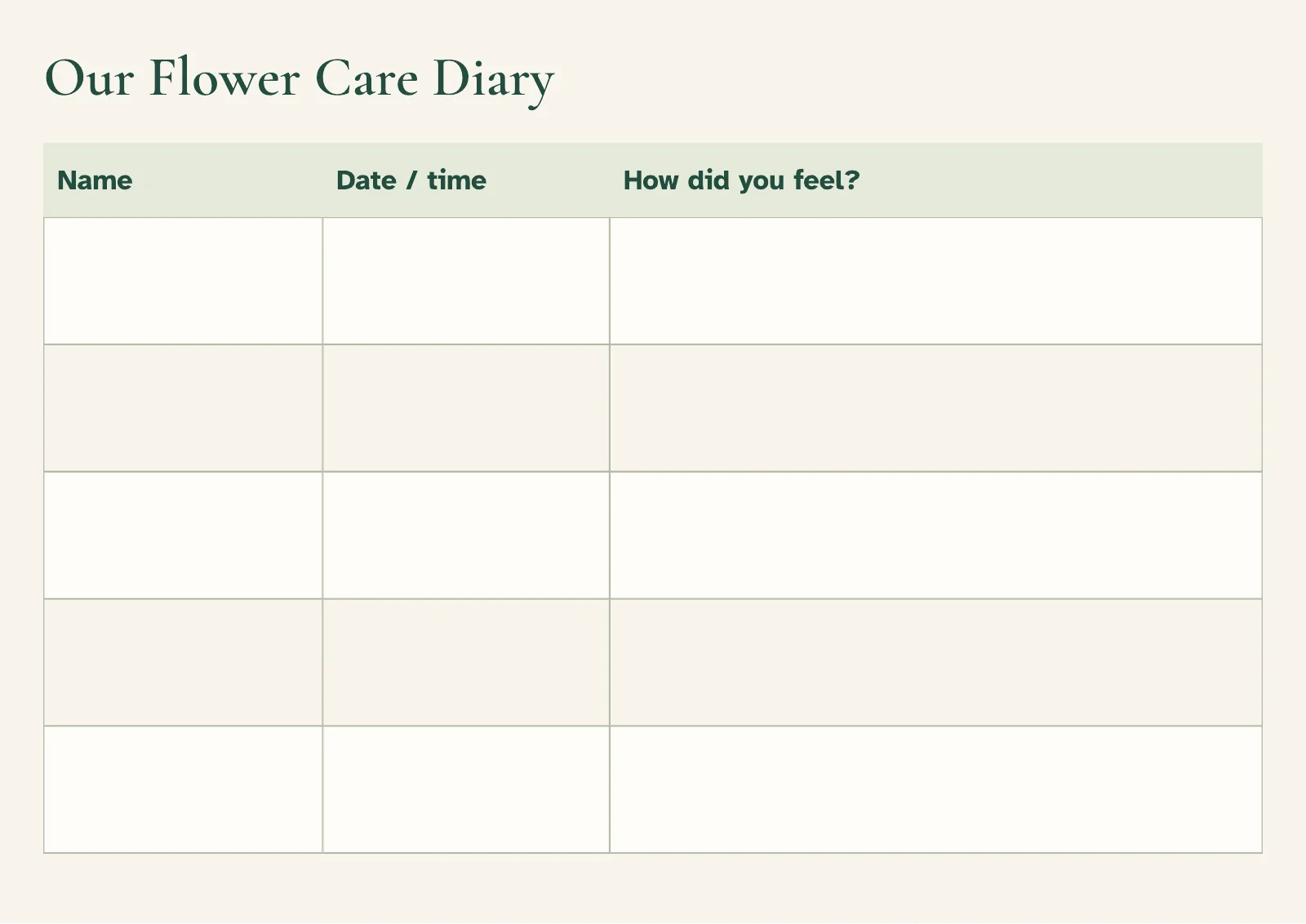
What draws someone back to the display? Who adds to it or looks after the flowers? How can the activity continue when the researcher is not there?
This project is ongoing. The photographs document activities and materials, while longer-term use and outcomes remain research questions.