Our
Garden.
Exploring how plants, shared care, and everyday relationships shape outdoor engagement in residential aged care.
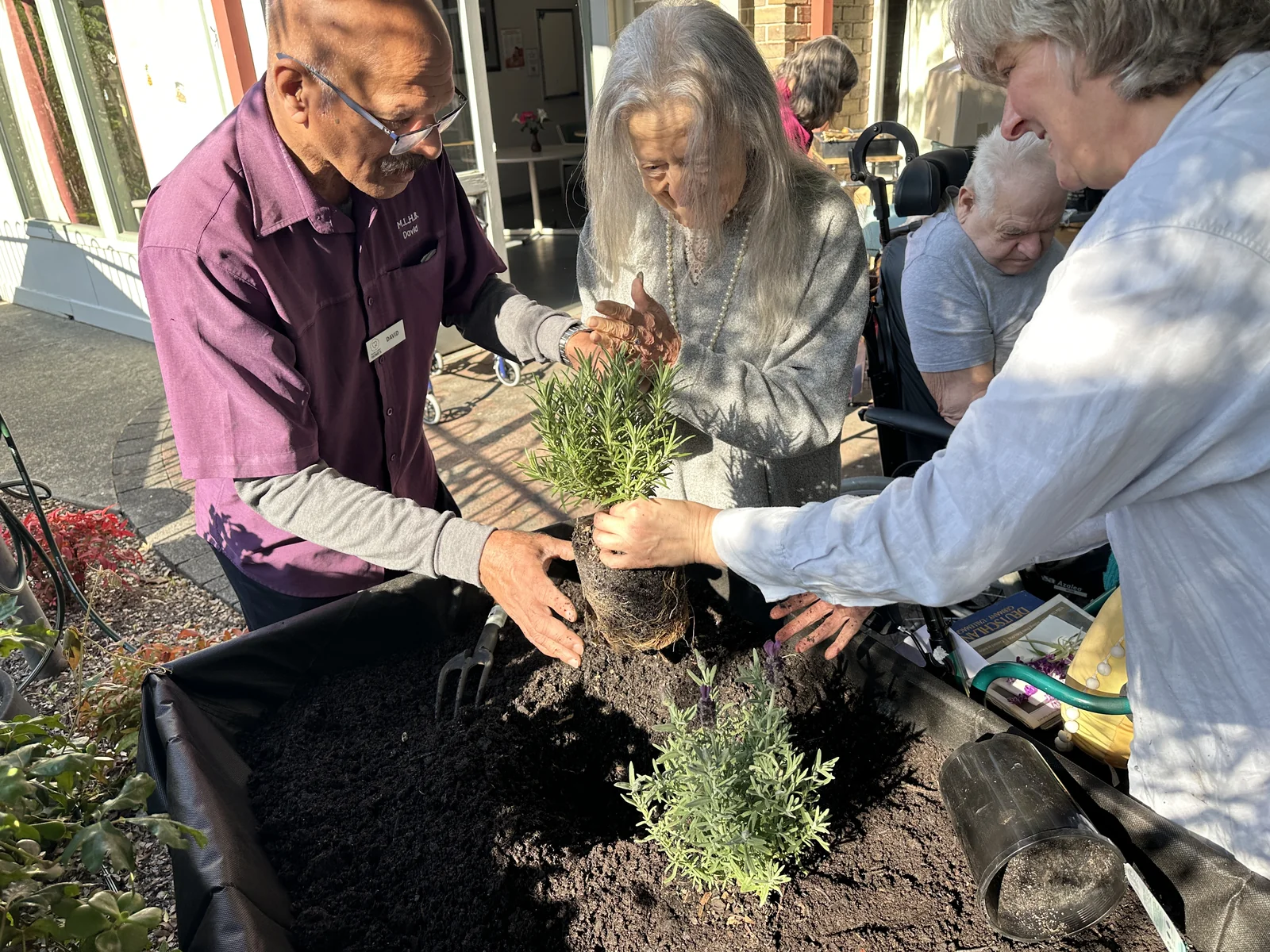
Working with living things.
Gardening brings a different rhythm to participation. Plants grow, change, and need care between organised activities. This study followed gardening activities over time, attending to practical work, sensory encounters, and the relationships formed around plants.
Shared activities included choosing plants, planting, and discussing what people noticed. Weather, space, and staff availability were part of the conditions that shaped participation.
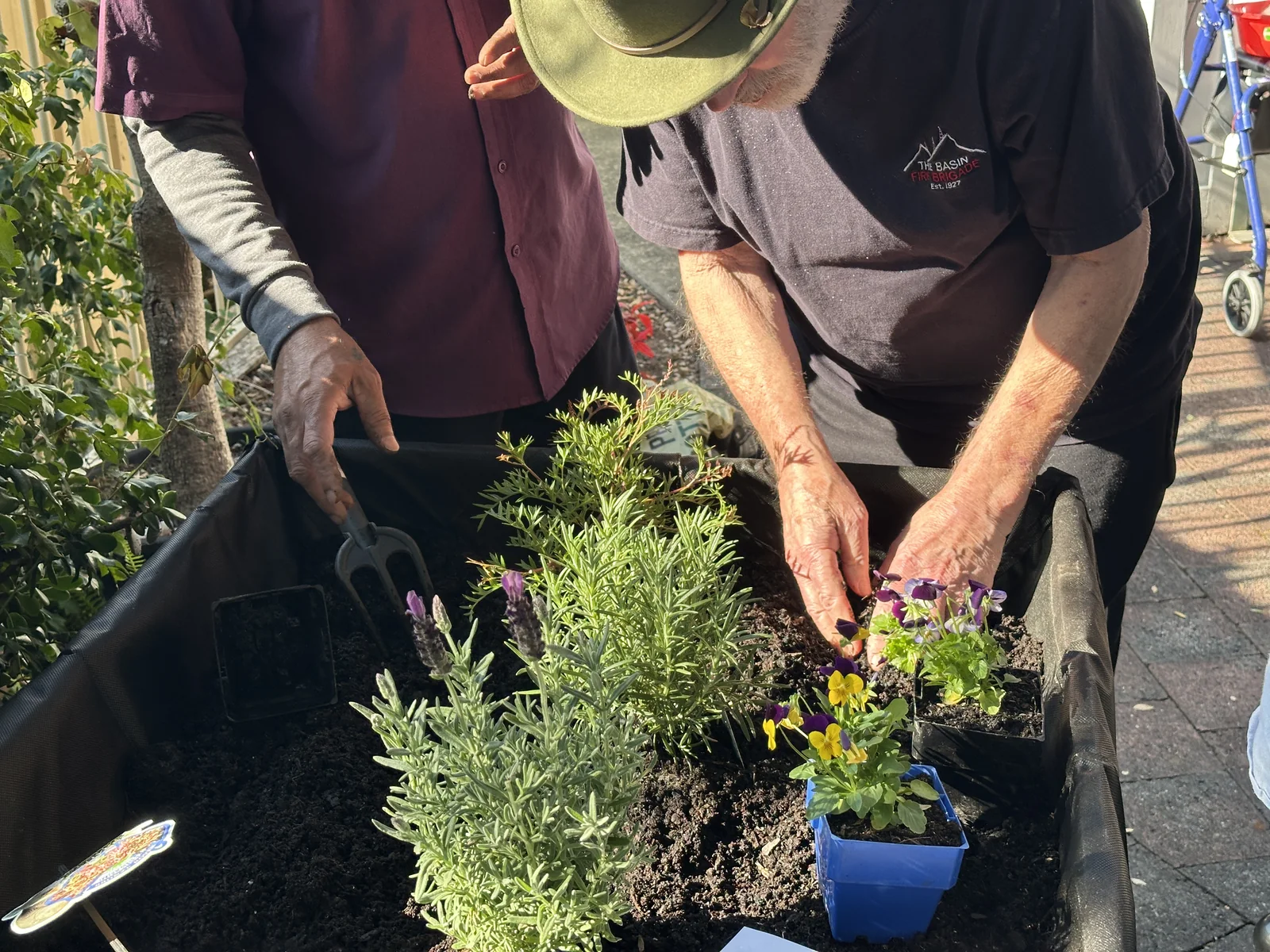
The garden reaches indoors.
Outdoor engagement did not always mean being physically outside. Photographs and plants could bring the garden into indoor conversations. Plants adopted into personal spaces also became part of the relationship between individual care and a shared garden.
The study followed the movement of plants between personal spaces and communal areas, and explored how photographs might support remembering and talking about garden activities.
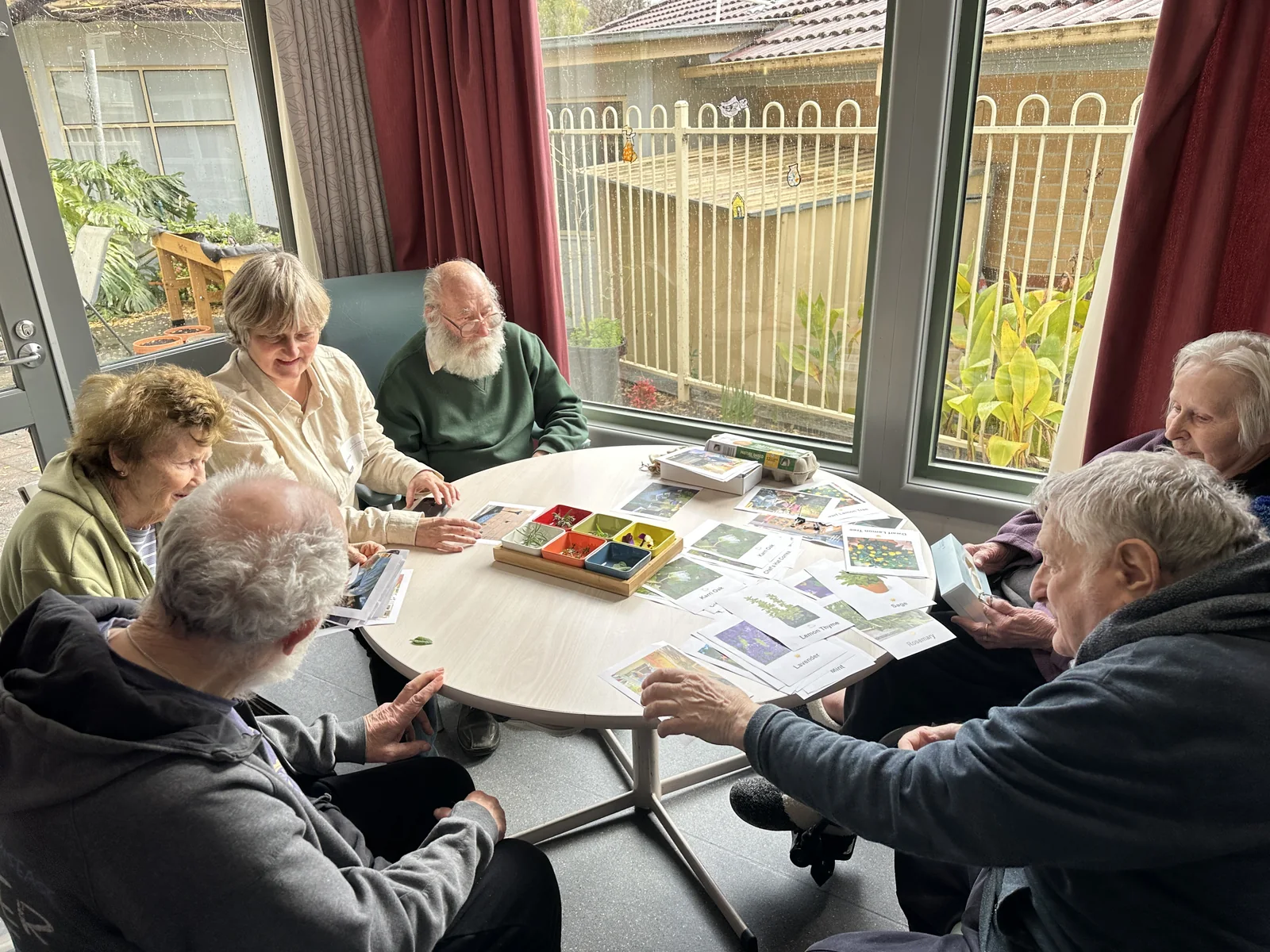
The design question is not simply how to increase time outdoors. It also concerns what can make the garden present, approachable, and meaningful within daily life.
Technology within the activity.
Photographs and a plant-character chatbot were explored as ways to support looking back and conversation. These experiments also exposed limits: responses depended on the situation, the person, and the support available.
The research treats technology as something to examine within real activities. A device or a conversational response is not, by itself, evidence of meaningful participation.
Care is part of the design.
Participation developed within everyday arrangements: where a plant could be kept, who could help, and how an activity fitted the day. These details were central to understanding what could continue.
A garden activity includes the work before and after a session. Designing for continuity means attending to ongoing care, staff collaboration, and opportunities to revisit a contribution.
The next study explored curiosity about the wider outdoor environment through maps, nature cards, and birdsong.